I was recently advised to remove the word delve and its derivatives from my thesis. Apparently, delve needs to be avoided as it is a word favoured by AI writing programs.
I have never used ChatGPT or any other AI writing program to write anything for me. I have no need to do so. I know how to write, and I enjoy the writing process. So why should I have to self-censor? I thought I would delve into this topic.
Merriam-Webster states that one of the meanings of delve is: to make a careful or detailed search for information.
If you think I am using the word delve rather a lot in this article, you are not mistaken. I like the word. And delving is something researchers are expected to do. AI does not own the word delve.
Fortunately, I rarely use em dashes – except for now – to clarify what an em dash is. Apparently, em dashes are baked into the DNA of AI; they are in effect AI’s calling card. People are steering clear of em dashes in their writing, so their work is not flagged as being AI generated.
Emily Dickinson, the nineteenth century North American poet, loved em dashes. She used this punctuation mark to such an extent that em dashes in her poems came to be known as the Dickinson dash. I won’t delve too much into why Emily deployed her dashes, but they worked for her. This link will take you to a few of her liberally dashed poems.
The rise of the AI behemoth has led to writers’ works being pirated. Authors such as Hannah Kent have had their beautifully crafted prose stolen to feed the greedy AI machine. And now we are expected to self-censor our writing and not use words such as delve for fear of being mistaken for the clanker that stole our work in the first place.
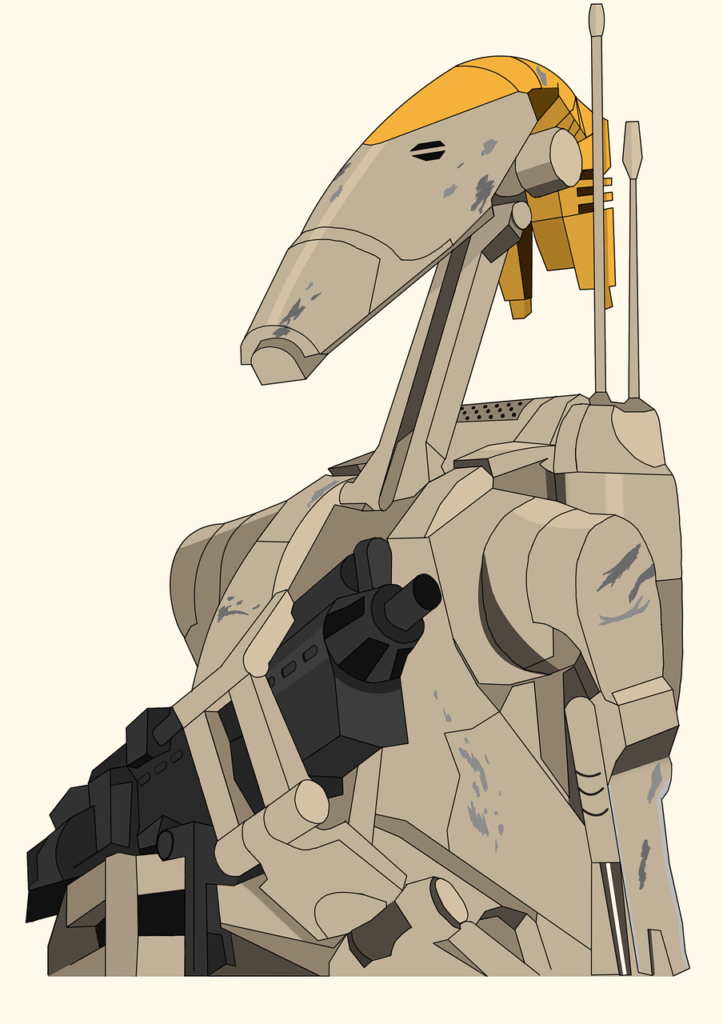
Clanker is an excellent word to describe AI bots. This slang term was first used to describe the metallic clanking sound made by Star Wars’ droids as they moved. Clanker has a lovely onomatopoeic ring and as a bonus rhymes with the ‘w’ word, which I will self-censor.
Written by Gemma Franks.
Image by Konrad Rugała from Pixabay.
